
 Save
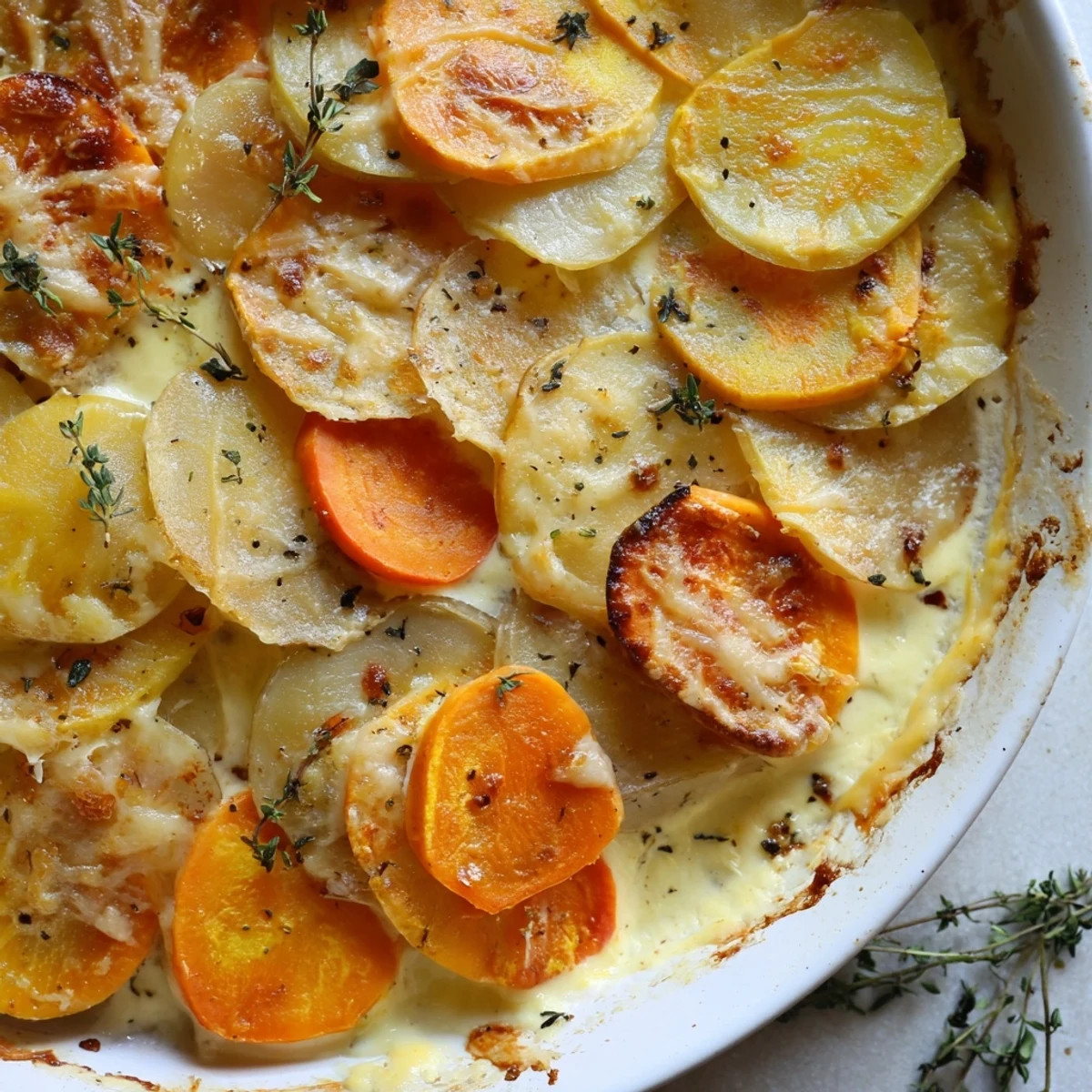
Save This dish showcases tender Yukon Gold potatoes, parsnips, carrots, and butternut squash layered and baked beneath a rich Gruyere cheese crust. Aromatic thyme and a creamy mixture of milk and cream bring warmth and depth to the gratin. Finished with a golden topping, it pairs perfectly with salads or roasted meats. Perfect for a cozy winter meal that highlights seasonal produce and comforting flavors.
My sister called on a grey November afternoon, asking if I could bring something warm to Sunday dinner. I opened the fridge, saw a pile of root vegetables I'd been meaning to use, and remembered watching my grandmother layer vegetables in a baking dish decades ago—her hands moving with such certainty. I decided to recreate that moment, this time with Gruyere and cream, and it became the dish everyone asked about.
I'll never forget my friend's face when she tasted this for the first time—she closed her eyes and said, 'This tastes like home, but I've never had it before.' That's when I knew the recipe had something special. Now whenever someone needs comfort food, this is what I make.
Ingredients
- Yukon Gold potatoes: They hold their shape beautifully and add a subtle richness that starchy varieties can't match.
- Parsnips: These bring a gentle sweetness that deepens in the oven—don't skip them, they're the secret ingredient no one expects.
- Carrots: Use fresh ones if you can; they'll add natural color and a hint of earthiness without overpowering the dish.
- Butternut squash: It softens into silky layers and sweetens the whole gratin slightly, balancing the rich cheese sauce.
- Gruyere cheese: The aged nuttiness is essential; don't substitute with young Gruyere or it won't melt into those golden streaks.
- Heavy cream and whole milk: The combination gives you richness without being heavy—if you use all cream, it can feel cloying.
- Fresh thyme: Strip the leaves from the stems right before using; dried thyme will taste dusty and won't give you those delicate flavor notes.
- Nutmeg: Just a whisper is all you need—I learned this the hard way by adding too much once.
Instructions
- Set your stage:
- Preheat the oven to 375°F and butter your baking dish generously—this prevents sticking and adds flavor to every bite.
- Build the cream base:
- Melt butter in a saucepan, then let the garlic and onions soften gently until they're just turning translucent. Pour in the cream and milk, add thyme and nutmeg, and let it warm through without boiling—you want it steaming, not bubbling.
- Layer with intention:
- Arrange half your vegetables in the dish, thinking about how they'll nestle together as they soften. Season each layer lightly and scatter half the Gruyere over them.
- Repeat the rhythm:
- Add the remaining vegetables, then the rest of the cheese, creating a pattern that feels balanced.
- Pour and cover:
- Gently pour the warm cream mixture over everything, letting it seep between the layers. Cover with foil to trap steam during the first phase of baking.
- The golden transformation:
- Bake covered for 40 minutes, then remove the foil and bake another 20 minutes until the top turns deep golden and the edges bubble slightly.
- The patience moment:
- Let it rest for 10 minutes before serving—this lets everything settle and makes it easier to portion without everything sliding around.
 Save
Save There's something about watching this dish bake through the oven window—the way the cheese bubbles at the edges, how the vegetables release their steam and create this amber-colored sauce. It became the thing I baked when I needed to remember that sometimes the simplest preparations tell the biggest stories.
The Art of Layering
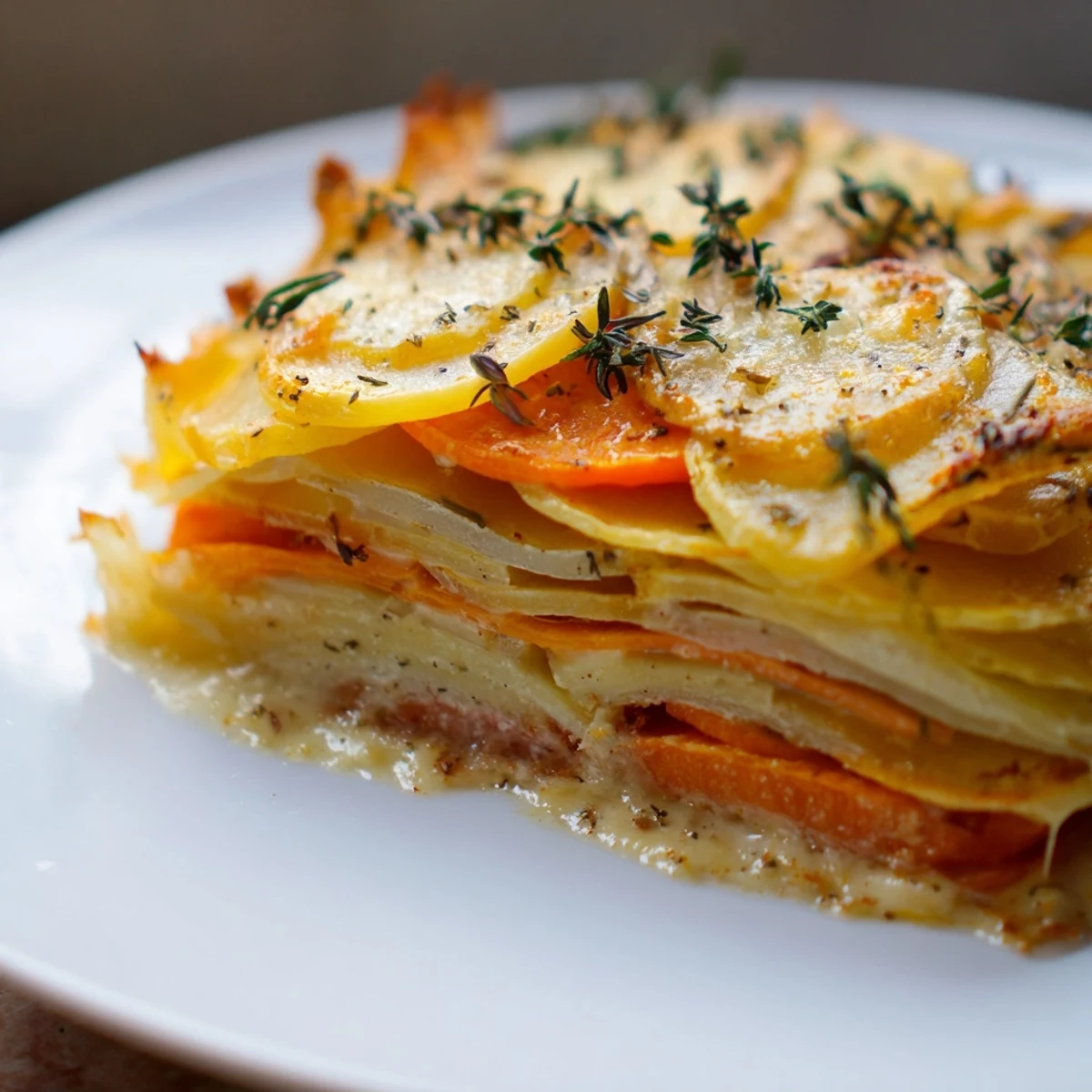
Layering isn't just about stacking vegetables; it's about creating a structure that cooks evenly and looks beautiful when you cut into it. Mix your vegetable types in each layer so every bite has variety—potatoes with carrots with squash, rather than all potatoes together. This also helps them cook at roughly the same rate, since different vegetables have different densities.
Variations and Substitutions
I've made this with Brussels sprouts instead of carrots on a whim, and it was phenomenal. You could also add thin slices of fennel for a subtle anise note, or swap the Gruyere for aged Cheddar if that's what you have. The framework is flexible—the beauty is in the technique, not the exact vegetables.
- Emmental creates a milder, slightly creamier result than Gruyere if you prefer a gentler flavor.
- A pinch of cayenne or smoked paprika adds warmth and complexity without making it spicy.
- Gluten-free breadcrumbs work perfectly if you want the crunchy topping without the gluten.
Serving and Pairing
Serve this as a main course with a simple green salad and crusty bread to soak up every bit of sauce, or offer it as a sophisticated side alongside roasted chicken or beef. It also reheats beautifully—cover it loosely with foil and warm it gently at 325°F until heated through.
 Save
Save This gratin reminds me that the most comforting dishes are often the ones that let good ingredients speak for themselves. Make it when you need to feel grounded.
Recipe Q&A
- → What vegetables are best for this gratin?
-
Root vegetables like Yukon Gold potatoes, parsnips, carrots, and butternut squash work beautifully, providing texture and sweetness.
- → Can I substitute Gruyere cheese?
-
Yes, Emmental or sharp cheddar are excellent alternatives, offering similar meltability and flavor.
- → How can I make the gratin gluten-free?
-
Simply omit breadcrumbs or use gluten-free breadcrumbs to keep the topping crispy without gluten.
- → Why is thyme used in this dish?
-
Fresh thyme adds a subtle earthy aroma that complements the creamy sauce and vegetables perfectly.
- → How to achieve a golden crust?
-
Bake covered initially, then uncover for the last 20 minutes to brown the cheese and breadcrumbs, creating a crisp topping.