
 Save
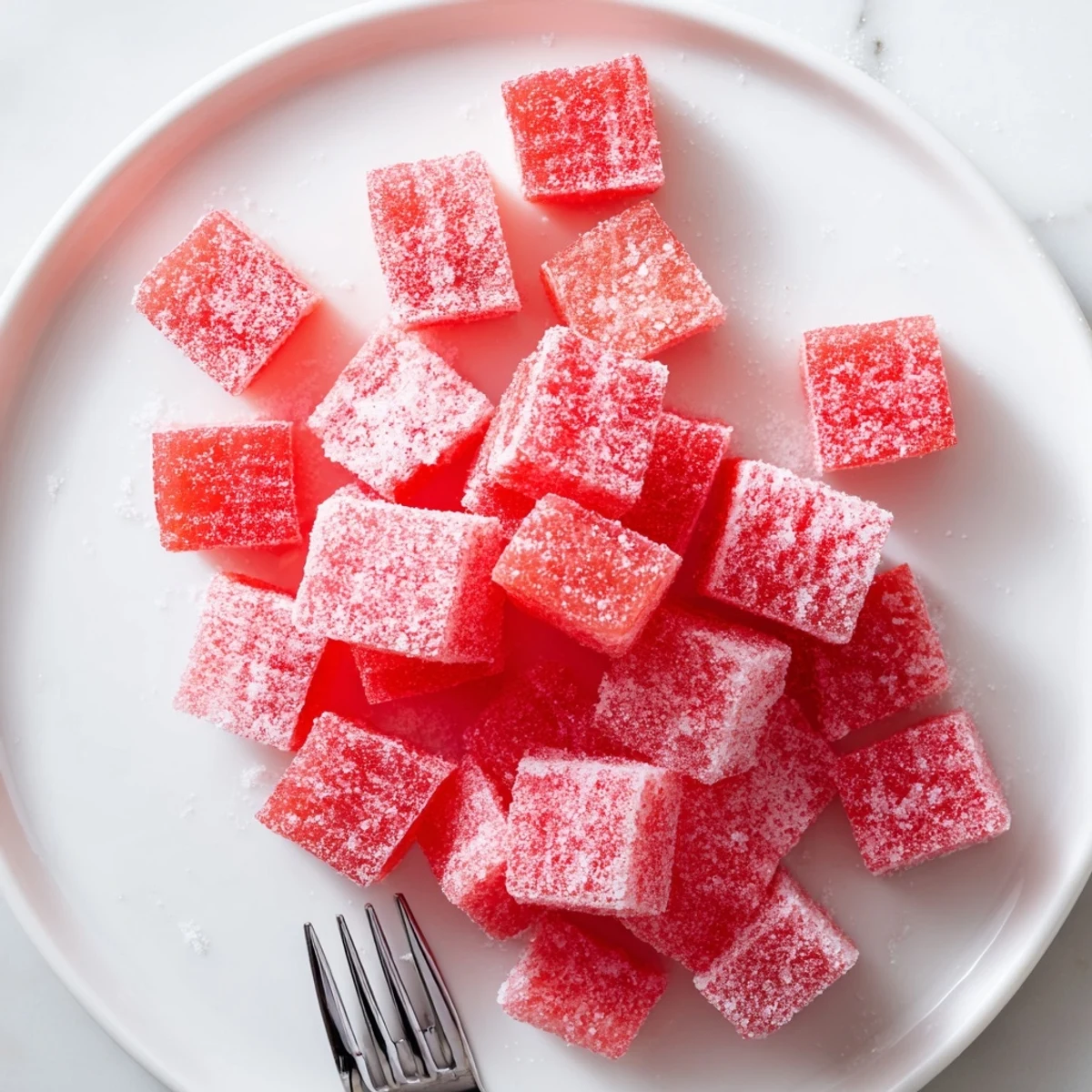
Save Create irresistible chewy watermelon candies with a perfect balance of sweet and tangy flavors. These fruity treats combine fresh watermelon puree with a zesty sugar coating for an irresistible snacking experience. The process involves blooming gelatin in fruit juice, heating with sugar until dissolved, then setting the mixture before cutting into bite-sized squares and rolling in a sour citric acid blend. Each piece delivers satisfying chewiness alongside bright watermelon essence that melts in your mouth. These homemade confections make excellent gifts or party treats, offering a nostalgic candy shop experience with real fruit ingredients.
Last summer I found myself with way too many watermelons from my CSA box and decided to experiment with making candy instead of letting them go to waste. My kitchen smelled amazing during the process, and I ended up with these tart little chews that my friends now beg me to make every August.
I brought a batch to a neighborhood potluck and watched them disappear in minutes. People could not believe they were homemade and kept asking me what the secret ingredient was.
Ingredients
- Seedless watermelon puree: Fresh watermelon blended and strained gives you the cleanest flavor, though frozen puree works in a pinch
- Lemon juice: Brightens the watermelon flavor and helps the gelatin bloom properly
- Light corn syrup: Prevents sugar crystals from forming and keeps the chews soft and chewy
- Unflavored gelatin powder: Essential for that gummy texture, make sure to let it bloom fully
- Granulated sugar: Sweetens the fruit base and creates the coating
- Citric acid powder: This is what gives you that satisfying sour punch, found in the canning aisle
Instructions
- Prepare your pan:
- Line an 8x8 inch pan with parchment paper and give it a light coating of oil so nothing sticks
- Mix the fruit base:
- Combine watermelon puree, corn syrup, and lemon juice in a small saucepan, stirring until everything is incorporated
- Bloom the gelatin:
- Sprinkle the gelatin powder over the surface and walk away for 5 minutes, it will look wrinkly and absorb the liquid
- Dissolve everything:
- Add the sugar and warm over medium-low heat, stirring constantly until everything dissolves but do not let it come to a boil
- Set the candy:
- Pour into your prepared pan, smooth the top, let it cool for 30 minutes at room temperature, then refrigerate for 2 hours until firm
- Make the coating:
- Mix sugar and citric acid in a bowl while the candy chills
- Cut and coat:
- Use a sharp knife to cut the set candy into small squares, then roll each piece in the sour sugar mixture until completely coated
- Store properly:
- Layer the finished chews in an airtight container with wax paper between the layers so they do not stick together
 Save
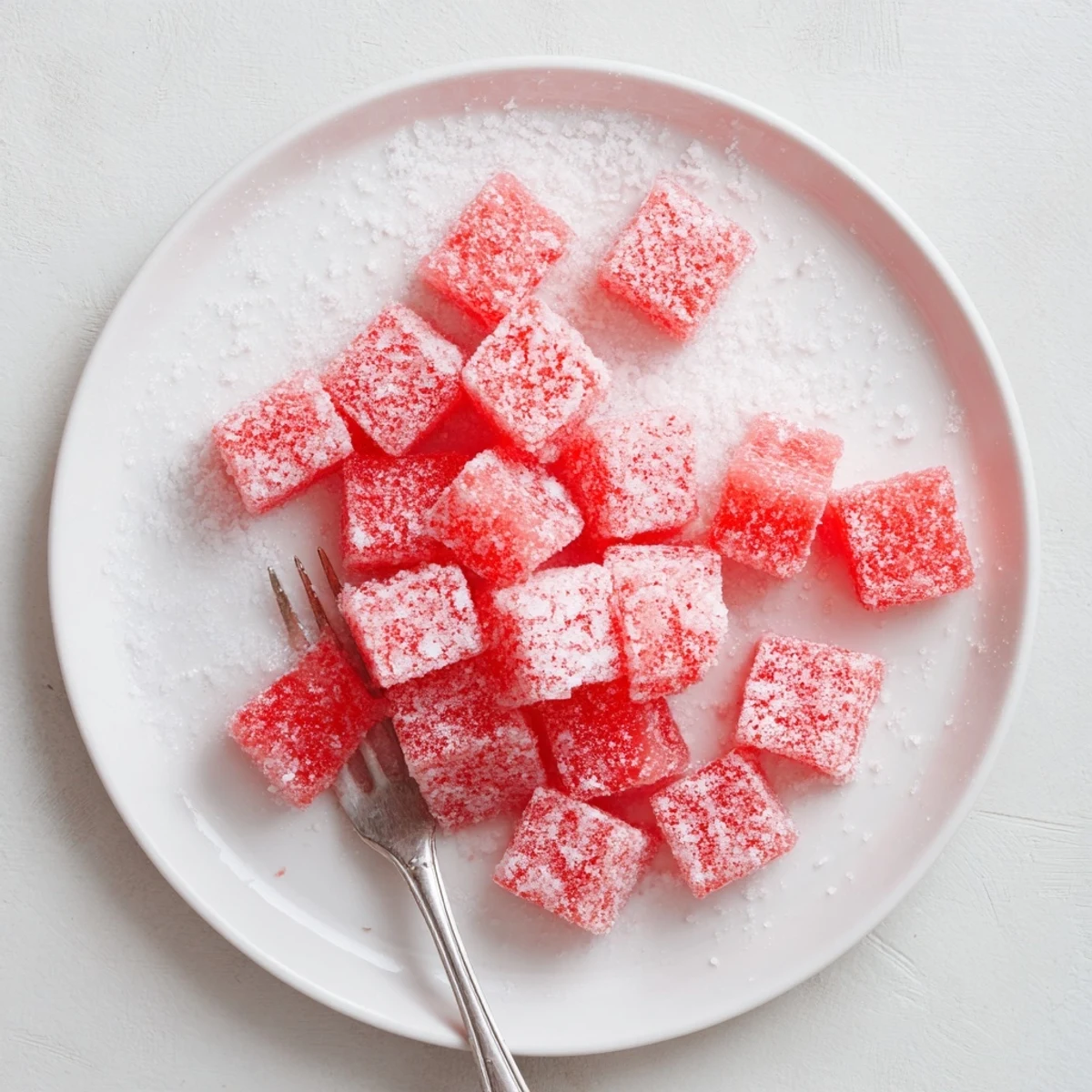
Save My niece helped me make these last weekend and kept sneaking pieces before we even finished the coating step. She told me they tasted like summer in a bite.
Getting the Right Texture
The key is patience during the setting stage. If you try to cut the candy too soon it will be sticky and lose that nice chewy consistency.
Flavor Variations
You can swap out the watermelon for strawberry puree or mango. Each fruit brings its own personality and the sour coating works beautifully with almost any sweet fruit base.
Making These Last
These are best within the first week for that perfect chewy texture. After that they start getting a little harder though they still taste delicious.
- Keep them away from humidity or the sugar coating will get sticky
- Store in a cool dark place, not the refrigerator, or they will become too firm
- Package them in small bags tied with twine for adorable gifts
 Save
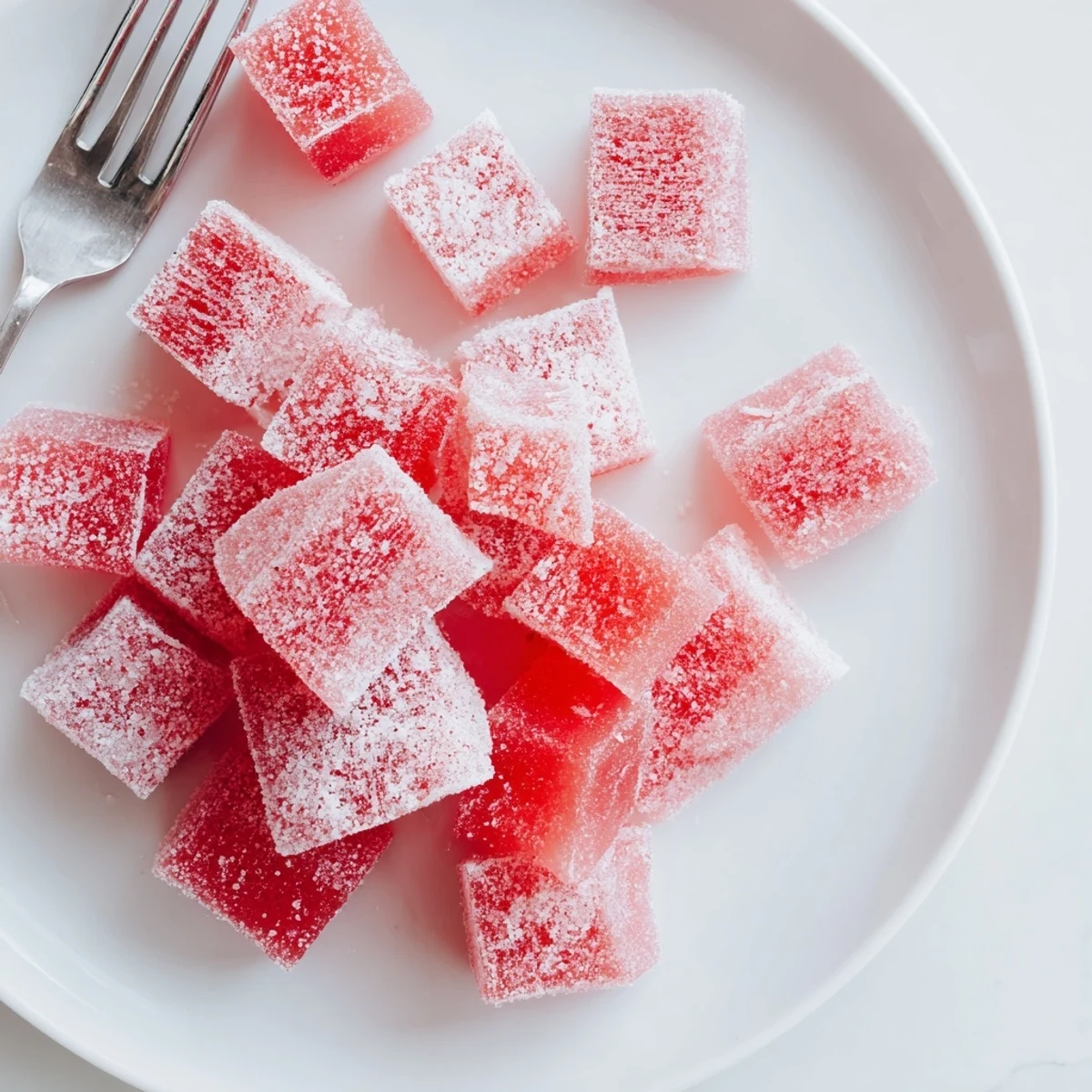
Save These have become my go-to summer treat, and I love how something so simple brings so much joy to everyone who tries them.
Recipe Q&A
- → How long do these chews stay fresh?
-
These watermelon chews maintain ideal texture for about one week when stored properly in an airtight container with wax paper separating layers. After this timeframe, they may become sticky or lose their chewy consistency.
- → Can I make these vegan-friendly?
-
Traditional gelatin comes from animal sources, making this version unsuitable for vegans. You could experiment with agar powder as a plant-based gelling alternative, though texture and setting times may vary from the original formula.
- → What fruits work best for this recipe?
-
Watermelon provides mild sweetness and lovely pink color, but you can substitute strawberry, raspberry, peach, or mango puree. Each fruit brings different acidity levels, so you may need to adjust lemon juice or citric acid amounts accordingly.
- → Why did my mixture not set properly?
-
Improper setting usually results from not letting gelatin bloom fully, overheating the mixture (boiling can break down gelling properties), or insufficient refrigeration time. Ensure gelatin sits for 5 minutes before heating, keep temperatures below a boil, and chill for the full 2 hours.
- → Can I reduce the sugar content?
-
Sugar plays a crucial role in texture and preservation. Reducing sugar affects chewiness and shelf life. The coating sugar helps prevent sticking while providing the classic sour-sweet contrast. You can slightly reduce sugar, but expect softer candies that spoil faster.
- → Where can I find citric acid?
-
Citric acid powder is available in the canning or baking aisle of most grocery stores, health food stores, or online retailers. This natural ingredient provides the tangy sour coating that balances the sweet fruit base and sugary exterior.