
 Save
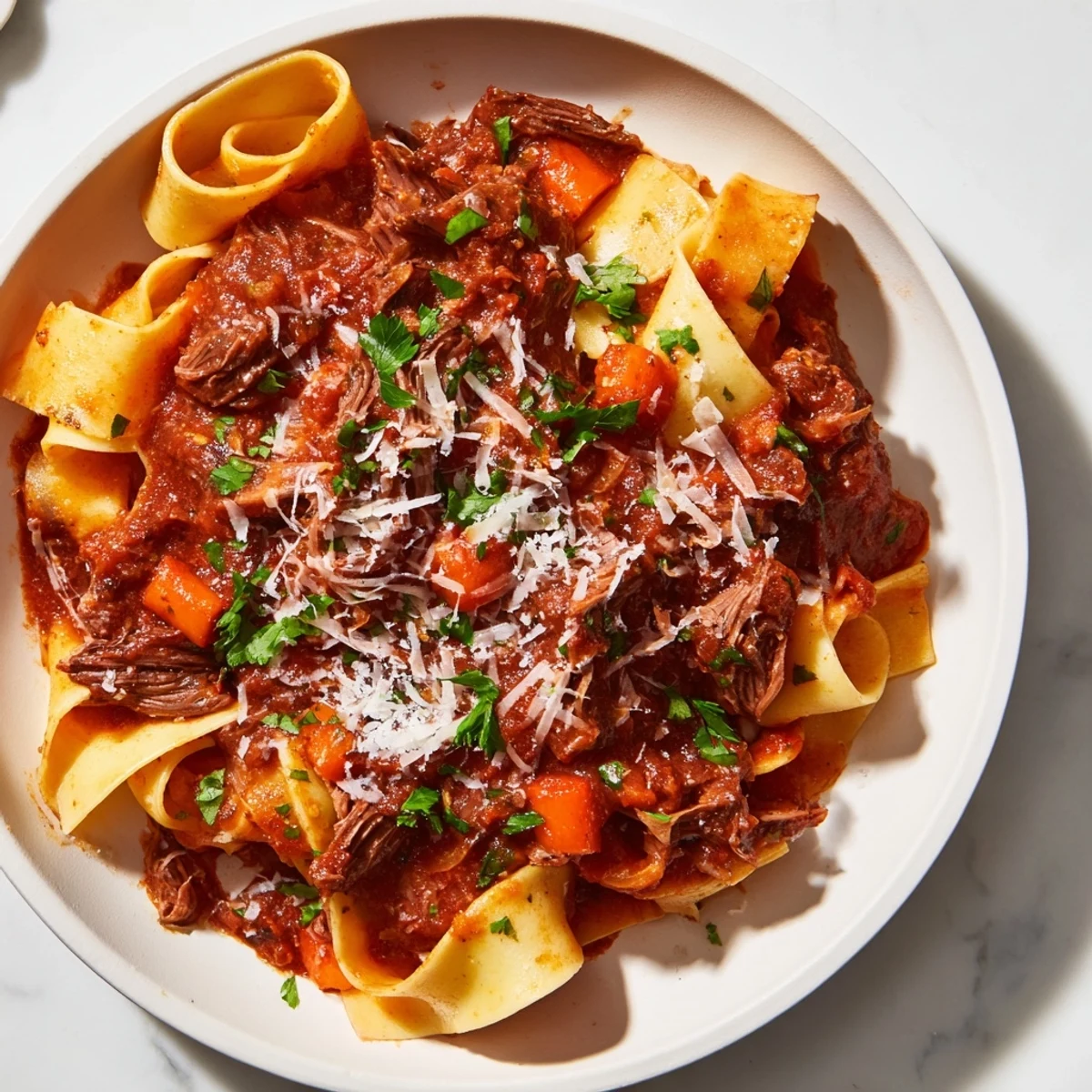
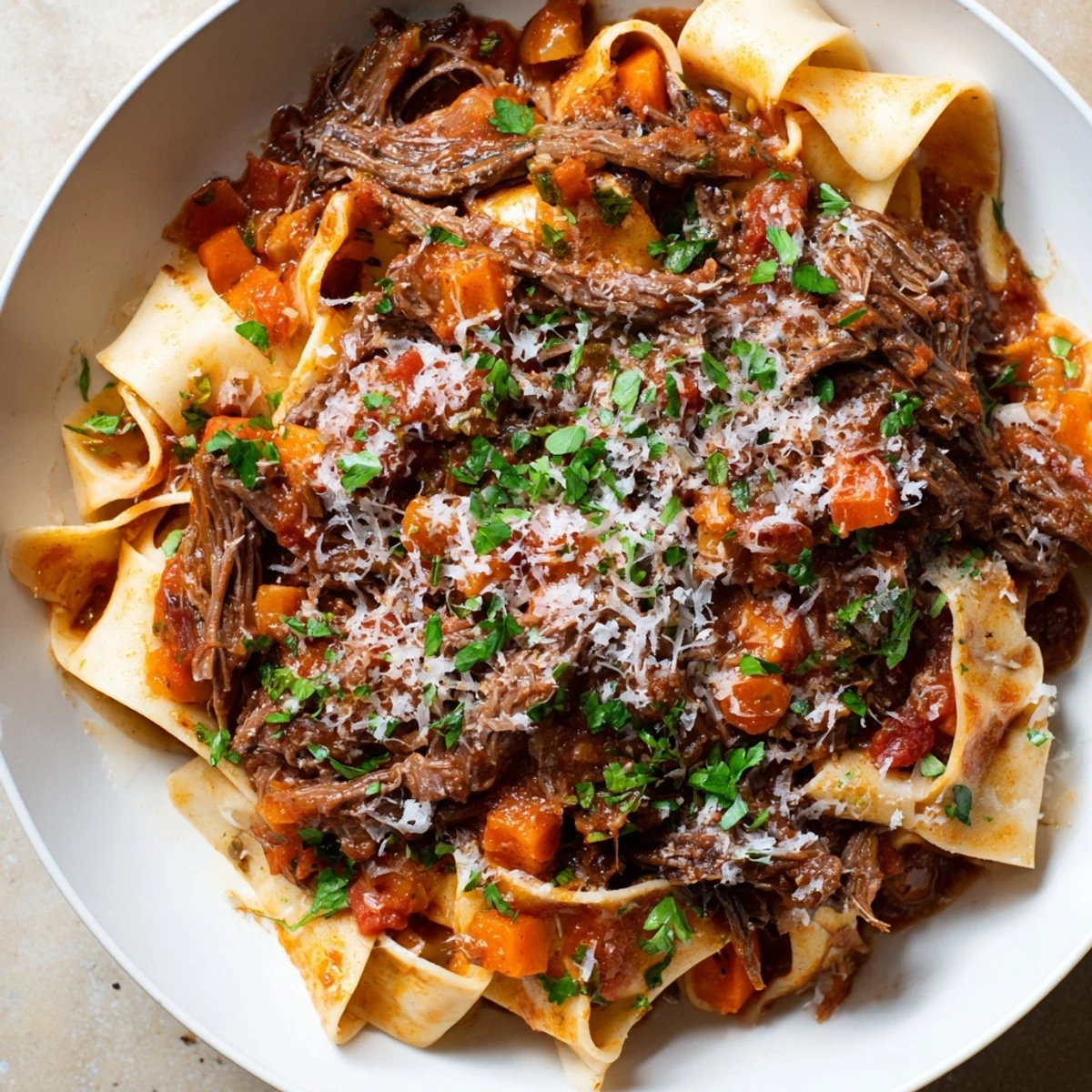
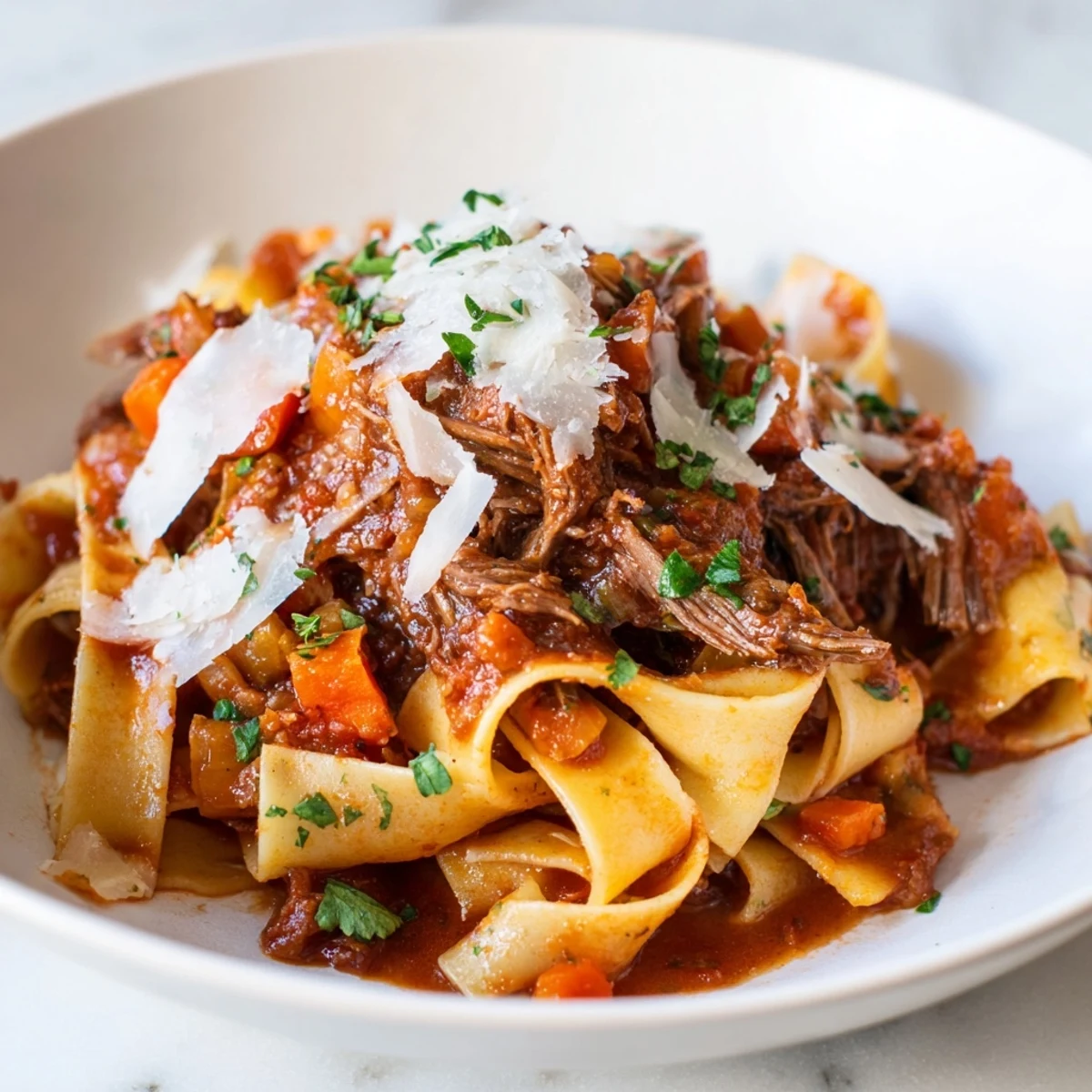
Save This dish features large cuts of beef chuck slowly cooked to tender perfection with a blend of tomatoes, aromatic herbs, and red wine. The savory sauce is combined with al dente pappardelle pasta and finished with freshly grated Parmesan and parsley. The slow cooking develops deep, rich flavors and a comforting texture that pairs beautifully with the wide pasta ribbons. Aromatics like onion, carrot, celery, and garlic create a balanced base, enhancing the hearty sauce. Ideal for a medium-difficulty main dish, this meal brings classic Italian taste with minimal prep and extended cooking time for tenderness.
I used to think ragu was just another pasta sauce until a particularly gray Sunday left me with a tough cut of beef and nowhere to be. The slow cooker hummed all afternoon while I caught up on laundry, and by evening the apartment smelled like a trattoria I couldn't afford. That first forkful of tender, wine-soaked beef tangled in wide noodles taught me that patience isn't just a virtue—it's a flavor.
I made this for my sister's birthday once, doubling the recipe because her friends always show up hungry. Watching six adults go quiet over their bowls, too busy twirling forkfuls to talk, remains one of my prouder kitchen moments. Someone asked if I'd trained in Italy, and I just smiled and said the slow cooker did all the work.
Ingredients
- Beef chuck roast (2 lbs): This cut has enough marbling to stay moist through long cooking, and it shreds beautifully once tender—don't swap it for sirloin or you'll end up with dry bits.
- Olive oil (2 tbsp): Use this to sear the beef and build a golden crust, which adds depth you can't get by skipping this step.
- Yellow onion (1 large): Dice it small so it melts into the sauce rather than floating around in chunks.
- Carrots (2): They add a subtle sweetness that balances the tomatoes and wine without tasting like dessert.
- Celery (2 stalks): This brings an earthy backbone that rounds out the aromatics, even if you think you don't like celery.
- Garlic (4 cloves): Mince it fine and don't let it burn in the pan, or it'll taste bitter instead of fragrant.
- Tomato paste (2 tbsp): Cooking this for a minute in the skillet caramelizes the sugars and deepens the tomato flavor in a way that raw paste can't.
- Crushed tomatoes (28 oz can): The texture is perfect for ragu, not too chunky and not too smooth, and good quality tomatoes make a noticeable difference.
- Beef broth (1 cup): This keeps the sauce from getting too thick and adds a savory richness that water just can't match.
- Dry red wine (1/2 cup): I use whatever I'd actually drink, nothing fancy, but don't use cooking wine because the salt and off flavors will ruin it.
- Dried oregano, thyme, basil (2 tsp, 1 tsp, 1 tsp): These dried herbs hold up better in the slow cooker than fresh would, blooming slowly into the sauce.
- Crushed red pepper flakes (1/2 tsp, optional): A tiny kick wakes up the richness without making it spicy, but skip it if you're serving kids.
- Bay leaves (2): They add a subtle herbal note you'll miss if you forget them, just remember to fish them out before serving.
- Pappardelle pasta (1 lb): These wide ribbons catch the chunky sauce in every bite, and their texture is sturdy enough not to get lost under all that beef.
- Parmesan cheese (1/2 cup, freshly grated): Pre-grated stuff doesn't melt the same way, and the nutty, salty punch of real Parmigiano-Reggiano is worth the extra two minutes of grating.
- Fresh parsley (1/4 cup, chopped): A handful of bright green at the end cuts through all that richness and makes it feel finished.
Instructions
- Season and sear the beef:
- Pat the beef chunks dry with paper towels, then sprinkle salt and pepper all over like you mean it. Heat the olive oil in a large skillet until it shimmers, then sear the beef in batches without crowding the pan, giving each side about 2 to 3 minutes to develop a deep brown crust before transferring it to the slow cooker.
- Cook the aromatics:
- In the same skillet with all those browned bits still clinging to the bottom, toss in the onion, carrots, and celery, stirring occasionally until they soften and start to smell sweet, about 4 to 5 minutes. Add the garlic and tomato paste, stirring constantly for just a minute until the paste darkens a shade and the garlic is fragrant, then scrape everything into the slow cooker.
- Build the sauce:
- Pour the crushed tomatoes, beef broth, and red wine into the slow cooker, then add the oregano, thyme, basil, red pepper flakes if you're using them, and bay leaves. Stir it all together gently so the beef gets coated and everything is evenly distributed.
- Slow cook:
- Cover the slow cooker and set it to low, then walk away for 8 hours while it does all the work. When you come back, the beef should be so tender it falls apart when you poke it with a fork.
- Shred and adjust:
- Pull the beef out onto a cutting board and use two forks to shred it into bite-sized pieces, then stir it back into the sauce. Fish out the bay leaves and discard them, then taste the ragu and add more salt and pepper if it needs it.
- Cook the pasta:
- Bring a big pot of salted water to a boil and cook the pappardelle according to the package directions until it's al dente, with just a little bite left in the center. Drain it well but don't rinse it, because the starch helps the sauce cling.
- Combine and serve:
- Either toss the drained pasta directly into the slow cooker with the ragu and stir until every ribbon is coated, or plate the pasta and ladle the ragu generously over the top. Finish with a snowfall of grated Parmesan and a scatter of fresh parsley.
 Save
Save The first time I served this to my neighbor, an older Italian woman who'd been skeptical of my cooking, she paused mid-bite and said it reminded her of Sunday dinners at her nonna's table. She didn't ask for the recipe, which I took as the highest compliment—some things you just let speak for themselves.
Make It Your Own
If you have a Parmesan rind sitting in the fridge, toss it into the slow cooker with the sauce and let it simmer away, adding a subtle umami richness that's hard to pinpoint but impossible to miss. Bone-in short ribs work beautifully here too, giving you even more depth from the marrow, though you'll need to remove the bones before shredding. I've also stirred in a splash of heavy cream at the end when I wanted something a little more indulgent, turning the ragu into something closer to a Bolognese.
Storage and Reheating
This ragu keeps in the fridge for up to four days in an airtight container, and honestly it tastes better the second day once all the flavors have had time to marry. You can freeze it for up to three months, portioned out in freezer bags so you can thaw just what you need on a busy weeknight. When reheating, do it gently on the stovetop with a splash of broth or water to bring back that silky texture, stirring occasionally so nothing sticks to the bottom of the pan.
Serving Suggestions
I usually serve this with a simple arugula salad dressed in lemon and olive oil, because the peppery greens cut through the richness in a way that feels necessary. Crusty bread for mopping up every last bit of sauce is non-negotiable, and a medium-bodied red wine like Chianti or Sangiovese makes it feel like a proper occasion. If you're feeding a crowd, set out extra Parmesan and let people go heavy-handed with it.
- Pair it with garlic bread that's been brushed with butter and broiled until golden.
- Serve alongside roasted vegetables like zucchini or bell peppers for extra color on the plate.
- Top with a few torn basil leaves at the table if you have fresh ones lying around.
 Save
Save There's something quietly triumphant about pulling a dish like this out of a slow cooker after a long day, knowing you did almost nothing and yet created something that feels like love on a plate. I hope it becomes one of those recipes you turn to when you need comfort, company, or just a reason to fill your home with the smell of something good.
Recipe Q&A
- → What cut of beef works best for this dish?
-
Beef chuck roast is ideal due to its marbling and tenderness after slow cooking, breaking down into flavorful shreds.
- → Can I substitute the pappardelle pasta?
-
Yes, tagliatelle or fettuccine make excellent alternatives with similar broad ribbons to hold the sauce well.
- → How long should the beef cook for optimal tenderness?
-
Slow cooking on low for about 8 hours ensures the beef becomes tender and easy to shred.
- → Is it possible to add more depth to the sauce?
-
Adding a Parmesan rind during cooking or using bone-in short ribs instead of chuck can enhance richness and flavor complexity.
- → How should the sauce be seasoned?
-
Season with salt, freshly ground black pepper, dried oregano, thyme, basil, and optional red pepper flakes for balanced and aromatic seasoning.