
 Save
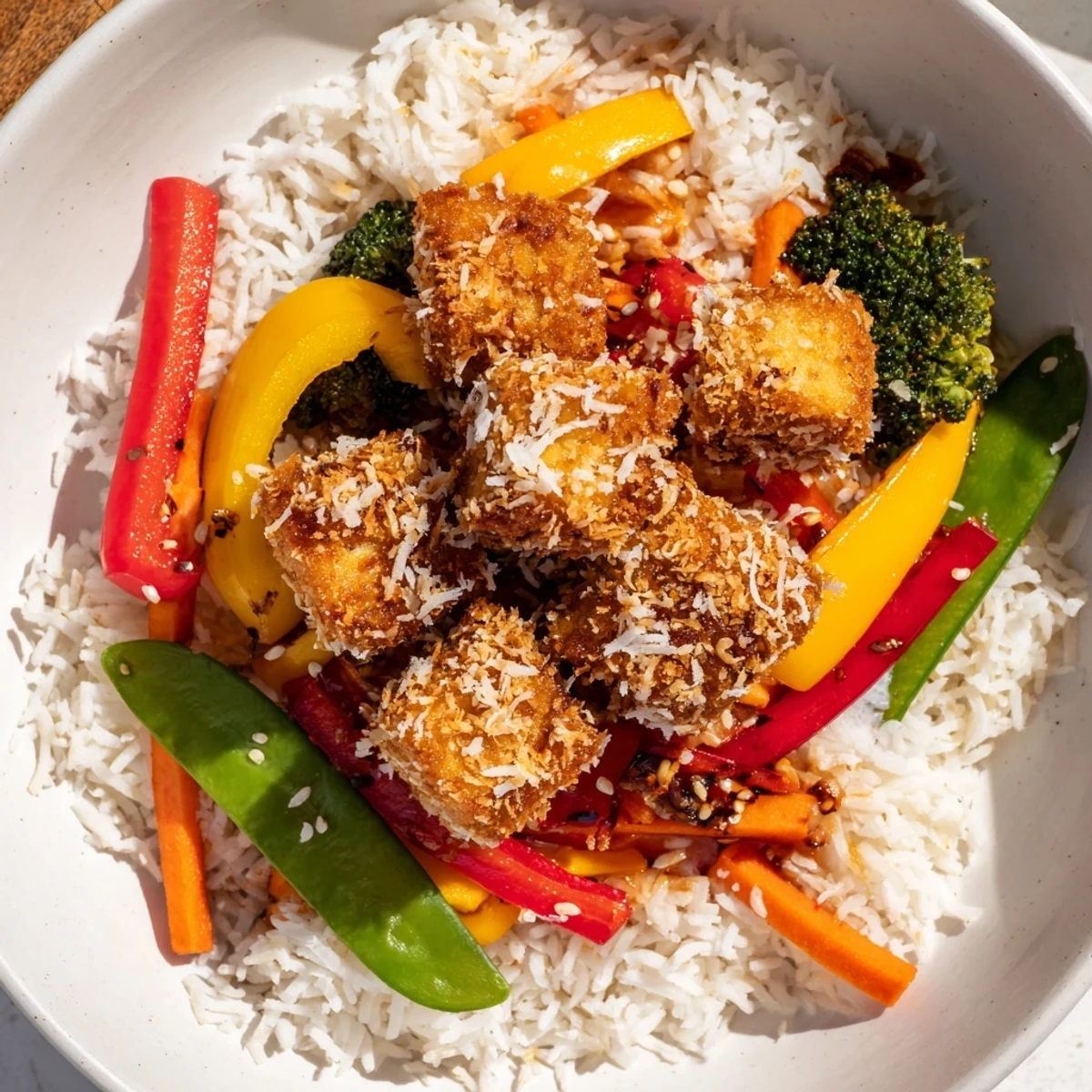
Save This dish features tofu coated in shredded coconut and panko, fried until golden and crispy. It’s served over fluffy jasmine rice alongside a colorful mix of stir-fried bell peppers, snap peas, broccoli, and carrots. Aromatics like garlic, ginger, and spring onions deepen the flavors, while toasted sesame seeds and fresh herbs provide a delightful finish. Quick to prepare, it balances textures and tastes for a satisfying plant-based choice.
There's something about the sound of coconut tofu hitting hot oil that makes me pause everything else in the kitchen. The first time I nailed this dish, I'd been experimenting with ways to make tofu exciting for friends who claimed they didn't like it, and watching them come back for seconds felt like winning a quiet kitchen victory. The golden crust, the way it shatters slightly when you bite through, the jasmine rice underneath catching all those savory vegetable juices—it all came together in a way that made me realize plant-based cooking wasn't about replacing anything, it was about discovering something entirely new.
I remember my partner walking into the kitchen as I was finishing the stir-fry, just as the garlic and ginger hit the hot oil, and the smell stopped them mid-step. They stood there watching the vegetables go from raw to perfectly crisp-tender, and before I'd even finished plating they were already reaching for a bowl. That's when I knew this recipe had something special—it catches people's attention before it even touches their tongues.
Ingredients
- Firm tofu (400 g): Press it well beforehand or the coating won't stick; I learned this by making slightly soggy batches until I got impatient one day and wrapped it tightly for a full hour.
- Unsweetened coconut milk (60 ml) and soy sauce (2 tbsp): This marinade is short but powerful, coating the tofu with flavor that actually penetrates instead of just sitting on the surface.
- Shredded coconut (80 g) and panko breadcrumbs (60 g): The combination of textures here is what makes the crust interesting; toasted coconut alone can taste a bit one-note, but panko adds structure and crunch.
- Cornstarch (1 tbsp): A small amount helps bind everything and creates those little crispy bits at the edges that everyone fights over.
- Salt, pepper, and vegetable oil for frying: Don't skip seasoning the coating mixture; it's easy to forget and then wonder why the crust tastes bland.
- Red and yellow bell peppers, carrots, snap peas, broccoli, spring onions: I pick these because they stay vibrant and don't turn into mush, but swap in whatever vegetables you have on hand and are excited about eating.
- Garlic (2 cloves) and fresh ginger (1 tbsp): Mince these fine so they distribute evenly through the stir-fry instead of leaving random chunks.
- Sesame oil (1 tbsp): Use a good quality one if you can; the fragrance really matters here and cheap versions taste a bit off.
- Jasmine rice (240 g) and water (480 ml): The water-to-rice ratio is important, so measure properly even if you usually eyeball it.
- Toasted sesame seeds, fresh cilantro or basil, and lime wedges: These finishing touches take the dish from nice to memorable.
Instructions
- Rinse and simmer the jasmine rice:
- Rinse the rice under cold water in a fine-mesh strainer, stirring gently until the water runs clear; this removes excess starch and prevents gumminess. Combine rice, water, and salt in a saucepan, bring to a boil, then reduce heat to low, cover, and let it sit undisturbed for 15 minutes before fluffing with a fork.
- Let the tofu soak up flavor:
- Whisk together coconut milk and soy sauce in a shallow bowl, then add your pressed tofu cubes and turn them gently so each piece gets coated. Give them 10 minutes to absorb the mixture; this seems quick but the flavor actually penetrates better than you'd expect.
- Build your coating armor:
- Mix shredded coconut, panko, cornstarch, salt, and pepper in a shallow dish, then press each tofu cube into the mixture, making sure all sides get covered and the coating stays put. The trick is pressing gently but firmly so it adheres without squishing the tofu itself.
- Fry until golden and crispy:
- Heat vegetable oil in a large nonstick skillet over medium heat and work in batches so the tofu isn't crowded; fry each batch for 6–8 minutes total, turning every couple of minutes to get all sides golden and crunchy. You'll know it's done when the coating sounds crispy when you tap it with a spatula.
- Wake up the vegetables with garlic and ginger:
- Wipe out your skillet, add sesame oil over medium-high heat, then add minced garlic and ginger and let them sizzle for just 30 seconds until fragrant; timing matters here because you want them flavorful but not burnt. This quick step is the backbone that makes everything that follows taste alive.
- Build the vegetable stir-fry in stages:
- Start with broccoli, carrots, and snap peas since they take the longest, stir-frying for about 2 minutes, then add bell peppers and cook another 2–3 minutes until everything is crisp-tender and still has color. Finish with soy sauce and spring onions, stirring for one final minute so all the flavors knit together.
- Bring it all together:
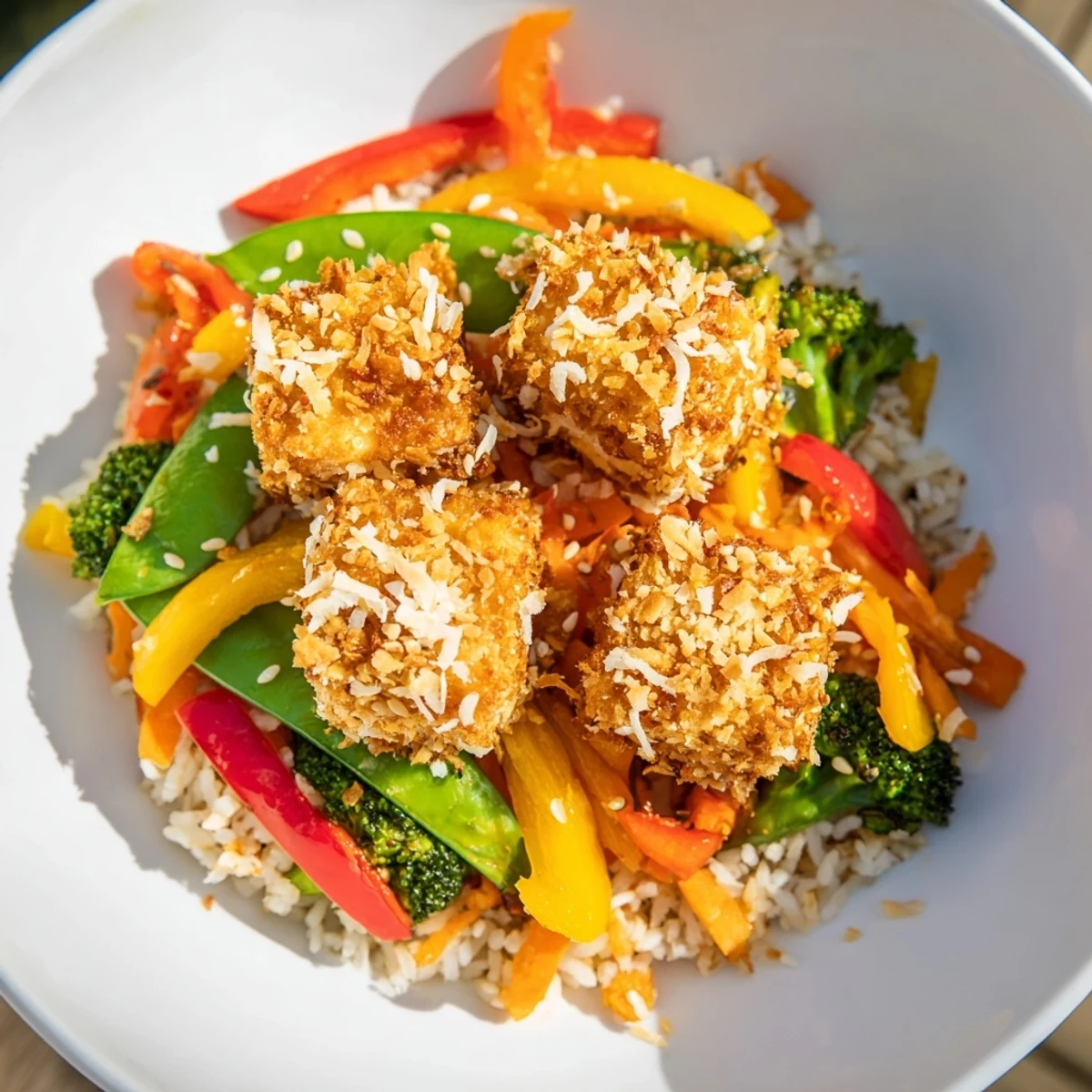
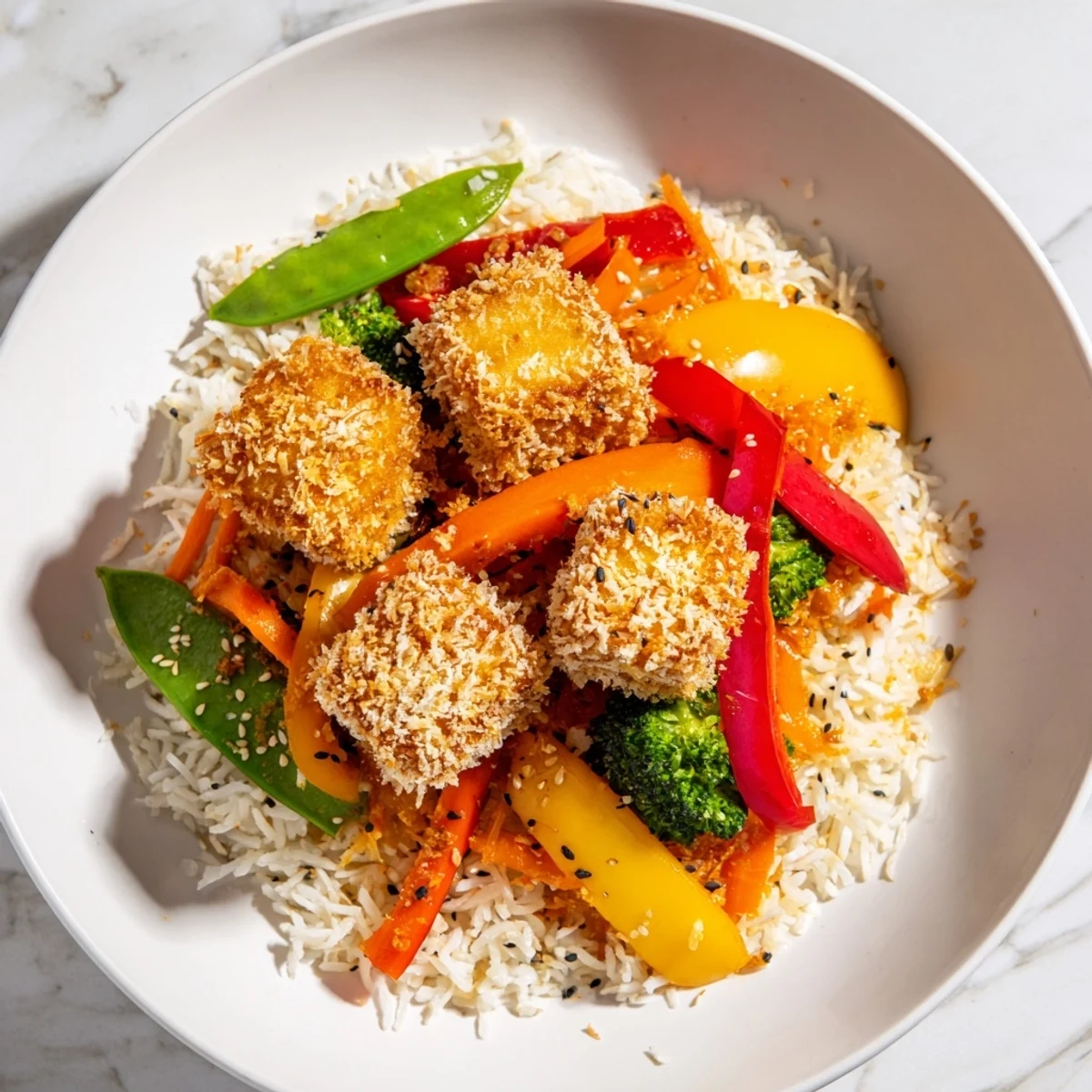
- Divide fluffy jasmine rice among bowls, then top with your stir-fried vegetables and crispy tofu cubes. Finish with sesame seeds, fresh herbs if using, and lime wedges on the side so people can squeeze brightness into their own bite.
 Save
Save What stuck with me most about perfecting this dish wasn't any single element, but the moment I realized my mom—who's always been skeptical about vegetarian cooking—had asked me to make it twice in one week. She didn't frame it as trying something different; she just wanted it because she actually wanted to eat it, and that shift in how she approached plant-based food mattered more than any compliment could.
Why the Coconut Crust Works
Tofu needs texture to feel satisfying, and that's where most plant-based cooking stumbles. The combination of shredded coconut and panko creates something that's actually crispy and interesting, not just a bland coating that tastes like cardboard. The cornstarch in the mixture helps everything bind together and adds those little caramelized edges that make you want to pick up extra pieces with your hands.
Building Flavor with Vegetables
Stir-frying is about building momentum and layering flavor rather than just dumping everything in at once. By starting with the longer-cooking vegetables and adding softer ones later, you end up with a dish where each component actually tastes like itself instead of becoming a uniform mush. The garlic and ginger at the beginning create a flavor base that everything else lives in, and the soy sauce at the end pulls everything together without making it one-note.
Serving and Customizing
This dish comes together beautifully as written, but it's also flexible enough to work with what you have. Fresh vegetables in your fridge right now are better than a trip to the store for something specific, and the same goes for herbs and garnishes. For extra richness, drizzle everything with a sweet chili sauce or creamy peanut sauce; for extra brightness, squeeze lime juice over the whole bowl before eating.
- Swap vegetables freely—mushrooms, zucchini, baby corn, or even broccoli rabe all work beautifully in place of what's listed here.
- For a gluten-free version, use tamari instead of regular soy sauce and look for certified gluten-free panko at most grocery stores.
- The tofu can be made a few hours ahead and reheated gently in a warm skillet, though it's genuinely best eaten right after it comes out of the pan.
 Save
Save This dish became a regular in my kitchen because it proved something I needed to know: plant-based cooking doesn't have to be complicated or feel like you're compromising on flavor and texture. It's just food that happens to be delicious, and that's enough.
Recipe Q&A
- → How do I get tofu crispy and golden?
-
Pressing tofu to remove excess moisture and coating it with a mixture of shredded coconut and panko breadcrumbs helps achieve a crispy, golden crust when fried in vegetable oil.
- → Can I substitute jasmine rice with another grain?
-
Yes, you can use basmati rice, quinoa, or even cauliflower rice for a different texture or dietary preference.
- → What vegetables work best for stir-frying here?
-
Bell peppers, snap peas, broccoli, and carrots provide vibrant colors, crisp-tender textures, and complementary flavors in this dish.
- → How do I keep the vegetables crisp-tender?
-
Stir-fry vegetables quickly over high heat, adding softer varieties like bell peppers last to maintain a balance between tender and crunchy.
- → Is there a gluten-free option available?
-
Substitute soy sauce with tamari and use gluten-free panko breadcrumbs to keep the dish gluten-free without sacrificing flavor.